3,000 JPY 〜/24 hours
4.16

122
1/6
2/6
3/6
4/6
5/6
6/6
Ofuro café utatane
Saitama/Onaricho, Kita Ward, Saitama City
3,000 JPY 〜/1 night
4.16 (161)
Description
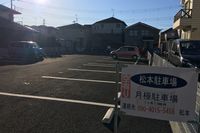
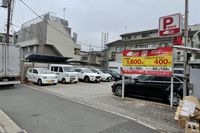
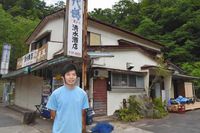
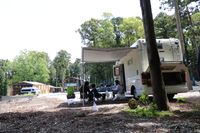
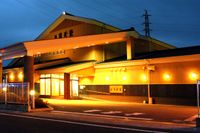
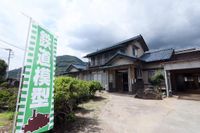
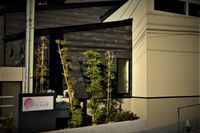
Located in Omiya City, Saitama Prefecture, Ofuro Cafe utatane is a hot bath facility that offers not only baths but also a stylish cafe, a lounge where you can read comics as much as you like, a working space where you can work, and accommodations. Located 8 minutes on foot from the New Shuttle Railway Museum Station, it is under the elevated railway tracks, so you can sleep in your car without worry in rainy weather. *A morning bath (5: 00 -9: 00) is included, and overnight parking is available for 1,000 yen.
Inquire about a camping station or its booking requirements up-front
Contact a HostBasic Facilities
24h Toilet
Water
WiFi
Playground
Pets Allowed
Smoking Area
Vending Machine
Washing Dryer
Waste Water Discharge
Security Cameras
EV Charger Stand
Administrator
Additional Fee Facilities
Electricity socket
Not available
Non-free Wifi
Not available
Non-free Shower
Not available
Onsen (Adult)
¥1500/person
Onsen (Child)
¥750/person
Dustbin
Not available
Dog Park
Not available
Camping Behavior Allowed
Not available
Tent (For 2-3 people)
Not available
Tent (For 4-5 people)
Not available
Cooking Allowed
Not available
BBQ Facilities Rental
Not available
Bonfire Allowed
Not available
Nearby Facilities
Convenient Store
ファミリーマート (100m)
Supermarket
ロジャース (600m)
Gasoline
エネオス (500m)
Restaurant
ガスト (1000m)
24h Toilet
おふろcafé utatane (100m)
Onsen
おふろcafé utatane (0m)
Parking space
Maximum lots:6 lot(s)
Parking Area Size:Length 5.3m・Breadth 2.2m・Height 制限なし
Note
Cancellation Deadline
17:00, 2 days before (Japanese time)
If you cancel your reservation after the Cancellation Deadline, cancellation fee will be applied. Cancellation rate can be checked here
Availability status
Please click a date to see the availability of car
Sun | Mon | Tue | Wed | Thu | Fri | Sat |
|---|---|---|---|---|---|---|
30 | 31 | 1 | 2 | 3 | 4 | 5 |
6 | 7 | 8 | 9 | 10 | 11 | 12 |
13 | 14 | 15 | 16 | 17 | 18 | 19 |
20 | 21 | 22 | 23 | 24 | 25 | 26 |
27 | 28 | 29 | 30 | 1 | 2 | 3 |
Sun | Mon | Tue | Wed | Thu | Fri | Sat |
|---|---|---|---|---|---|---|
27 | 28 | 29 | 30 | 1 | 2 | 3 |
4 | 5 | 6 | 7 | 8 | 9 | 10 |
11 | 12 | 13 | 14 | 15 | 16 | 17 |
18 | 19 | 20 | 21 | 22 | 23 | 24 |
25 | 26 | 27 | 28 | 29 | 30 | 31 |
Reviews
4.16(161 reviews)
栗田 貴志
4.00Mon, September 7, 2026

See all review photos
遅い時間のチェックインとなったが丁重に対応していただきました。 今回朝ご飯も頂きましたが美味しかったです。 モーニング以外のメニューも頼めると尚良かったと思います。
Translate To English
ゆーあみ
4.00Fri, August 7, 2026
たぬき
2.00Thu, July 16, 2026
駐車場が他の一般客と共用であり、非常に混雑していた上に、騒音のみならず、深夜にアイドリングしっぱなしの車がいたり、隣に駐車して車内を覗き込む悪質な若者もいた。
Translate To English
UDA-K
4.00Mon, June 1, 2026
朝風呂付きで満足でした。車中泊エリアが固定されていないようでしたが、施設利用者が夜中もアイドリングしていたことが残念でした。
Translate To English
なお
5.00Tue, May 12, 2026
3,000 JPY 〜/1 night
4.16 (161)
Reservation Deadline Time : No dead line (You can book anytime)
Login and proceed to checkoutContact a Host

Nearby Car Night Spots
Kanyo Inn (first, second and third-class rooms options)
¥20,000〜
/ per nightChiba Norocho, Chiba Shi Wakaba Ku
3.0
(0)Vanlife BASE | 45 min. from Narita Airport / Perfect for campervan travel/A seaside town rich in nature/Japanese countryside town/welcome traveler
¥7,000〜
/ per nightChiba Koseki, Kujukuri-machi, Sambu-gun
4.9
(70)Kawaguchiko Yatai Village
¥2,500〜
/ per nightYamanashi Kawaguchi, Fujikawaguchiko Town, Minamitsuru District
4.5
(58)Railway Guest House Tetsunoya (hot spring available)
¥3,000〜
/ per nightYamanashi Shizume, Kasugai-cho, Fuefuki City
5.0
(15)Nearby Activities
Cycling in Shinjuku! From the tourist information center [INBOUND LEAGUE] which is in a good location and takes 20 minutes to Shinjuku Gyoen, Meiji Jingu and Yoyogi Park.
¥2,000〜
/ per personTokyo Shinjuku, Shijuku-ku
3.0
(0)Organic Vegetable Picking at Microbe-NaturalFarmers
¥2,500〜
/ per personKanagawa Fukuda, Yamato Shi
3.0
(0)FRC Surf School (Beginners Welcome!)
¥5,400〜
/ per personKanagawa Kugenuma Kaigan, Fujisawa Shi
3.0
(0)Ranking Stations
Shin Meishin Suzuka PA (inbound) RV Station Suzuka * With Power!
¥2,200〜
/ per nightMie Yamamotocho, Suzuka-shi
4.3
(195)Vanlife BASE | 45 min. from Narita Airport / Perfect for campervan travel/A seaside town rich in nature/Japanese countryside town/welcome traveler
¥7,000〜
/ per nightChiba Koseki, Kujukuri-machi, Sambu-gun
4.9
(70)Nearby Drive Spots

Tove Jansson Akebono Children's Forest Park
This is a park that is a recreation of Moomin's world (a famous cartoon originating from Finland), in Hanno, Saitama. Within the park, there is a "Moomin Mansion" where there is an exhibition dedicated to the author, Tove Jansson, as well as historical items relating to Moomin itself.
Gotokuji Temple
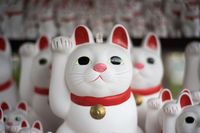
This is a Soto sect temple built in 1480 by Kira Masatada. It is said to be the birth place of the "Maneki-Neko" (waving cat) where there is a legend that Ii Naosuke built a temple here when invited by a cat to escape from a great thunderstorm. The temple contains thousands of Maneki-Neko, and is the only temple where the cats are revered.
Kawasaki Daishi Heikenji Temple
This is a temple, which was built in 1128 by the Hirama Kanenori. The temple was a mainstay for the Shingon sect and founded by Kukai, a famous Japanese poet. During a historical pilgrimage known as the 88 places of Kanto, the temple was designated as a special sacred site, and the Tokugawa family visited here during the Edo period(1603-1868). Even now, a great many people visit this shrine for the "Hatsumoude" (new years temple visit)
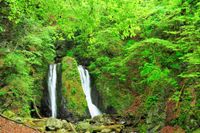
Mitsugama Falls
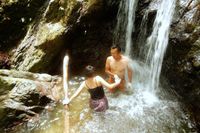
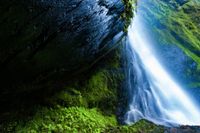
This area contains three impressive waterfalls in Okutama, with a height of around 12.5m. It is truly an area to get away from the hustle and bustle of the city, with just the wind, water and the chirping of the birds. There are larger waterfalls in the upstream area, and the area is ideal of hiking.
Mount Takao
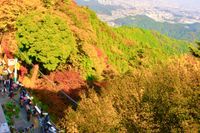
This is a 599m high holy mountain of the Shugendo religion (a fusion religion that originated in Heian Japan). The area was open to the public from 744 AD where Takao-san Yakuoin (a buddhist temple) was built. It is known as Tokyo's top autumn leaf spot, and has received three stars from the Michelin tourism guide. The area is also famous as a habit for the Japanese flying squirrel.
Nagatoro Gorge
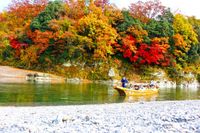
This is a famous valley in the upper part of the 6km Arakawa river, in Chichibu. The area is famous for its rock formations and visitors can enjoy canoeing, rafting and campings. The area is famous for its fresh water shaved ice and miso pickled pork. In autumn, one can enjoy the autumn leaves as well as apple picking.
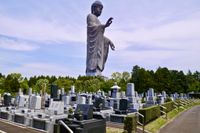
Ushiku Daibutsu
This is a buddha statue of Jodo Shinshu Hongganji sect opened in 1989 by Otani Kosho. At 120 meters tall, it is the tallest buddha statue in Japan, and the third tallest in the world, as per the Guinness World Record. Inside on the 1st to 5th floors, there are several exhibitions about the history of Buddhism as well as interactive exhibitions. There is also an observation deck at the top. Visitors can experience the natural life around them with the seasonal flora and fauna in the surrounding area.
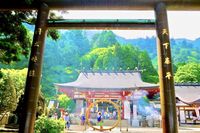
Oyama Afuri Shrine
This shrine was built in 200BC. It houses the Gods Oyamatsumino-okami (Mountain God)Takaokamino-kami (Water God)Oikazuchino-kami (Thunder God) . Historically the mountain was considered a place of worship, and was visited by all types, from warriors to common people. Minamoto Yoritomo offered a sword to defeat Taira clan, and it is said that from this the culture of "Osamedachi" (sword offering) was born, and its influence can even be seen in Japanese Rakugo comedy and Ukiyo-e art.
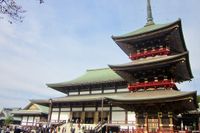
Naritasan Shinsho-ji Temple
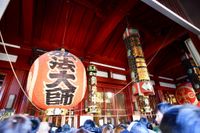
This is a temple of the Shingon sect which was founded in 940 by Kancho. Naritasan opened as a place of worship and reverence to Fudo Myoo and with a wish to end the battle of Taira Masakado. Ichikawa family became named as the "Narita-ya" in 1688 after the prayers of Kabuki actor Ichikawa Danjuro were finally answered and he was blessed with a son. It is a temple full of sights and views, with a triple tower, a large tower of peace, and Naritasan Park itself.
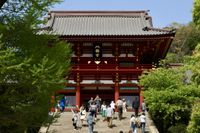
Tsurugaoka Hachimangu
This is a temple that was established in 1063 by Minamoto Yoshitsune. It houses the Yawata God known as Emperor Ojin HimegamiEmpress Jingu. The temple was central to the Kamakura Bakufu, which was started by Minamoto Yoritomo, and was known as guardian deity of Minamoto clan, a Kamakura Samurai. Under the reconstruction of the Hojo clan and Tokugawa families, the temple remains the heart of Kamakura and a place of respite and hope for many.
Kosuge Odaki Falls
Follow a 15-minute river trail deep into a thicket of shioji trees until it reveals a majestic rock, where the rapid of Tama River breaks in half and forms an absolutely breathtaking twin waterfall display. Kosuge Odaki Falls truly is a sight to behold and a favorite of many photographers.
Sarushima Island
This is Tokyo's only uninhabited island, in Yokosuka. The area was used for defense during the war, and there is evidence of this that can be seen today. The place is named "Sarushima" (Monkey Island). While there are no monkeys inhabiting the island these days, it is said that a priest named Nichiren was saved by monkeys when traveling to this island during the Kamakura era(1185-1333), hence the name.
Tomioka Silk Mill
This is a silk factory that opened in 1872, and is registered as a World Heritage Site. When the country opened its borders during the Edo era(1603-1858), it was used as one of the places of production of silk which was exported to countries, supporting the Japanese economy. The place was opened with the efforts of Okuma Shigenobu, Ito Hirobumi and Shibusawa Eiichi, with operations ceasing 116 years later in 1987. The reeling yarns and storage areas used when in operation are still present and available to view by visitors.
Oya History Museum
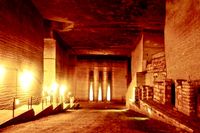
This is a huge underground area of around 20,000 meters squared which was formed by digging the area for 70 years between 1919 and 1986. During the war, it was used as an underground factory, and as a place for rice storage post war. Nowadays, it is often used as a setting for filming dramas, as well as a stage for concert performances.
Katori Jingu Shrine
It is a Shinto shrine that is said to have been built by the emperor of the first generation Jinmu around 650 BC. It is the main shrine of Katori Shrine group, of which there are 400 nationwide. The shrine God "Futsunushi no Kami" was revered as a warrior during the successive samurai regimes of Minamoto Yoritomo and Ashikaga Takauji, amongst others. Even these days, the shrine remains a place of worship and reverence for martial artists, and there are numerous cultural treasures here, such as the Kaijubudokyo, a sort of ancient medallion with imagery of marine creatures.
Arakura Fuji Sengen Jinja Shrine
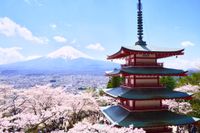
This is a temple built in 705 AD, housing the Gods known as Konohana-Sakuyahime, Ninigi no Mikoto and Oyamatsumino-okami. During the Sengoku Era(1467-1600), the warrior Takeda Nobutora visited here, praying for war victory. The area is especially famous for what has been oft known as the "best view in Mount Fuji" with the 5 storied pagoda, cherry blossoms and Mount Fuji in the background, to produce some truly postcard-worthy camera shots.
Mount Nokogiri Nihon-ji Temple
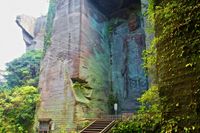
This is a temple of the Soto sect which was founded in 725 AD by Gyoki. The Buddha is of the Yakushi Nyorai, with Ryoben, a Buddhist monk, making Daikokuten statues from wood, Kukai, the founder of Shingon sect, making them from Stone, and Ennin, a priest, making the Kongourikishi statues. It is famous for the great buddha statue at 31 meters high, built in 1783, as well as the 1553 stone buddha statues and the viewpoint at Boso peninsula known as "peeking into hell".
Ikaho Onsen
This is an old Onsen bath in Ikaho Town. It boasts 1,300 years of history and appeared in Manyoshu, a book collection of traditional Japanese poetry. The Onsen was used as a place of healing for a wounded soldier named Takeda Katsuyori, and eventually he commanded the area to be turned into an Onsen town. The area was also loved by many literary greats such as Natsume Soseki, Hagiwara Sakutaro and Noguchi Ujo. It is also famous as a place for hot spring buns and dumplings.※Credit:旅と温泉の無料写真素材 おんふぉと http://on-photo.com/
Irohazaka Route
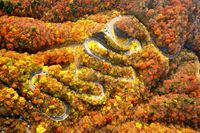
This is a hilly road (number 120) which has 48 turns - the same number of characters in the Iroha song. The first and second parts are separated by a hill, where there are two resting spots - Kurokami-daira and Akechi-daira where one can view Kegon Falls and Lake Chuzenji. The road is famous for appearing in the Japanese arcade game Initial D.
Kairakuen Garden
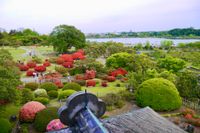
This is one of Japan's 3 most famous gardens, opened by Tokugawa Nariaki, of the Tokugawa clan, in 1842. He had a great love for the people and built it with the idea of people from all walks of life to have fun together. There are also around 3,000 plum trees of around 100 different varieties. Various festivals are held here throughout the year, such as the main plum festival in March, the cherry blossom festival in April, the Azalea festival in May, the Mito Komon festival in August, and the Hagi festival in September.